
Austen Chat: Episode 41
November 12, 2026
Jane Austen & Masculinity: A Visit with Michael Kramp
“He is just what a young man ought to be," said she, "sensible, good-humored, lively; and I never saw such happy manners!" —Pride and Prejudice
 We’re all familiar with Austen’s men: the good, the bad, and the unctuous. But how did changing ideas about masculinity in her day shape Austen's male characters? In this episode, we talk with Michael Kramp, professor of English at Lehigh University, about the fathers, brothers, friends, and suitors who fill her novels and what she reveals about each of them by how well, or how poorly, they meet their obligations.
Michael Kramp is a professor of English at Lehigh University and the author of Disciplining Love: Austen and the Modern Man (2007) and Patriarchy’s Creative Resilience: Late-Victorian Speculative Fiction (2024). He is also editor of Jane Austen and Masculinity (2017) and Jane Austen and Critical Theory (2021). In addition, Kramp is currently working on a long-term project, Jane Austen and the Future of the Humanities, using a public-access podcast and YouTube videos to engage with audiences beyond academia about the value of the humanities.
Show Notes and Links
Many thanks to Michael for joining us on Austen Chat!
Related Links
- Learn more about Michael Kramp and his work on his Lehigh University website.
- Learn more about his project, "Jane Austen and the Future of the Humanities," and its associated podcast and video shorts, available on your favorite podcast app and YouTube.
 Listen to Austen Chat here, on your favorite podcast app (Apple Podcasts, Spotify, and other streaming platforms), or on our YouTube Channel.
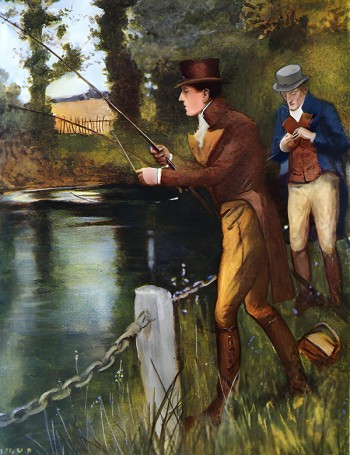
Credits: From JASNA's Austen Chat podcast. Published November 12, 2026. © Jane Austen Society of North America. All rights reserved. Illustration by A. Wallis Mills, Pride and Prejudice, 1910. Theme Music: Country Dance by Humans Win.
Transcript
This transcript has been lightly edited for clarity and readability.
[Theme music]
Breckyn Wood: Hello, Janeites, and welcome to Austen Chat, a podcast brought to you by the Jane Austen Society of North America. I'm your host, Breckyn Wood, from the Georgia Region of JASNA. Listeners, we are all intimately familiar with Austen's men: the good, the bad, and the unctuous. The Johns, Henries, Georges, and Fitzwilliams. But how much do we understand about Regency masculinity and the varied and subtle ways Austen plays with gender expectations in her novels? My guest today is here to help us examine the men of Austen's world and their complex social identities. Michael Kramp is professor of English at Lehigh University. He is the author of Disciplining Love: Austen and the Modern Man and Patriarchy's Creative Resilience, and editor of Jane Austen and Masculinity and Jane Austen and Critical Theory. In June of 2026, he gave an excellent plenary lecture at the Jane Austen Summer Program titled "Political Extremism, Difficult Dialogues, and Pride and Prejudice." He is currently working on a long-term public-facing project, Jane Austen and the Future of the Humanities. Welcome to the show, Michael.
Michael Kramp: Thank you so much. It's great to be here.
Breckyn: Okay, so to start, can you tell us a bit about your Austen origin story? When did you first encounter her works?
Michael: Yeah, I mean, I think I was late to the game, you know. I think I was late to the game. I don't think I'd heard of Jane Austen until my sophomore year in university. At my university there was—I'm not sure if it was a requirement, but it was definitely encouraged for students to enroll in one what they called major author course: one course that focused explicitly and singly on one author. And in spring of 1993—I mean it was in the fall of '92, but registering for courses in spring of '93—I remember there was a course on Jane Austen. I had looked her up and found out she was this novelist from the 19th century. I thought I liked 19th-century novels. So I went ahead and registered for the class. And I remember it was kind of a threshold moment for me, where I was trying to decide whether I really wanted to major in English or not. And I thought, well, here'll be a course that'll be interesting to sort of work as a gauge for that. So I enrolled in this class, and I—you know, two things still stand out in my memory about this class. One, I was the only male student in the class.
Breckyn: Ohhh . . .
Michael: Yeah, yeah.
Breckyn: Even in the '90s. I'm surprised that that early the gender divide had already happened.
Michael: Oh, yeah, even in the '90s, I was the only male student in the class, which, you know, was a really, you know, fantastic experience in many ways. And the—it's true. I mean, it's absolutely true. And the other thing that really stands out about that class is that, you know, I had no idea who this person was at the time, but that was, I believe, the last Austen class taught by Claudia Johnson at my university before she left. Now, I didn't know who Claudia Johnson was. I mean, it would have meant nothing to me as a 19-year-old college student, but it's been interesting sort of in the years since, trying to think back about, you know, what did I learn in spring of 1993 from Claudia Johnson that has stayed with me? So, my origin story is very much tied to university.
Breckyn: So, it's like you accidentally stumbled into a Harold Bloom Shakespeare class and had no idea what you were getting into?
Michael: No idea what I was getting into. And it was interesting because my memory of this—well, we probably shouldn't talk about this in the podcast, but my memory of this is that Claudia then took a leave of absence and then took a job at Princeton. Um, yeah. When I say to people I took a class with Claudia Johnson in university, I always want to make clear to note that I was not one of those smart people who went to Princeton. It was, it was at her previous institution.
Breckyn: I'm always reminding everybody that I only have a bachelor's degree, despite the fact that I'm always interviewing all these PhDs and stuff. I'm like, I promise I'm not trying to lie about my credentials.
Michael: Breckyn, you're that good.
Breckyn: Aw, thanks. Okay, well that's really funny that you were the only male in this class full of females, because that's what we're talking about today. Several of the books that you've written and edited have talked about how ideas surrounding masculinity and male identity were in flux during Austen's time because of the social and political climate. So, can you just give us like a quick history course? What's going on there and why are these things affecting male identity?
Michael: Sure. I mean, I'm not sure how quick it is, but you know, I think that there's plenty going on, right? There's plenty going on. So the short answer might be something like this: that, you know, Austen is writing—and really coming to write—in a time of great revolutions, whether you want to think about just the French Revolution and the American Revolution, and how we are going to understand the emergence of, you know, a new British nation in the wake of those revolutionary moments. And so I do think it's—you know, that's where I would probably start—is that this is a time period in which how we are going to understand what a good man is, what a proper man is, what a man of England is going to be inflected by the experiences of the French Revolution and the American Revolution. And so that's important in a couple of ways, right?
The first, I would say, is that there's a whole series of writings and discourses that emerge following the American Revolution, the French Revolution, about questions of this proper man of feeling or the proper man of sense. And, you know, this is something that has a long legacy, whether we go back to Lord Chesterfield's letters to his son, Samuel Richardson's Sir Charles Grandison—which is Austen's favorite novel and talks extensively about this—but also texts like Laurence Sterne's Sentimental Journey or Henry Mackenzie's Man of Feeling. And perhaps most prominently, for our purposes here today, we think about something like Edmund Burke's Reflections on the Revolution in France [sic], which really kind of bemoans and critiques what Burke sees as happening with masculinity and the French Revolution. Specifically Burke makes the point that— you know, he has this famous line in Reflections on the French Revolution or [Reflections on] the Revolution in France, where he says, "the age of chivalry is gone." It's over, right? And he says, you know, that there was this time when we had noble sentiments and grace and courtesy and chivalry and gallantry, and that is now gone. And he writes specifically—he's writing specifically about this moment, right, where the revolutionaries storm into the queen's bedroom and take her. And he said, "This would never have happened in an age of chivalry. This would never have happened in an age of men who knew how to feel properly, and knew how to behave gallantly."
And then there's this other discourse that emerges, in many ways directly in response to Burke, but also has a much longer legacy. We often talk about Wollstonecraft's Vindication of the Rights of Woman, but her first Vindication of the Rights of Men is written in direct response to Burke. And, you know, Burke publishes the Reflections on the Revolution in France in 1790. Mary Wollstonecraft writes immediately back in almost, like, a pamphlet-war mentality—sort of critiquing the excessive feeling, the excessive sentimentality that she finds in Edmund Burke, and specifically thinking about it as irrational. And this is sort of an argument that she develops then in her Vindications of the Rights of Woman. But other writers do as well. So, we could think about thinkers like William Godwin, Thomas Paine, John Locke—but also, perhaps more importantly, people like Mary Robinson, who are really trying to develop alternative ideas about what a rational man could look like—what a man of reason, who was able to sort of think through intellectual challenges, would look like. Now, that dialogue, I think, is really important for framing Austen's understanding of masculinity for two reasons.
One, I think it helps us appreciate the ways in which we're going to see the dynamics between men and women in Austen's fiction. The sort of—that legacy of Wollstonecraft, sort of defending that man of reason, also becomes a way for her to defend this physically virile, vigorous male figure. And she sort of openly mocks then. I mean, we get the sort of open critique of husbands who are too much of lovers, or the military man who has too many social acquaintances, right? Who's too sensitive to sensations and feeling. And so, I think that dialogue becomes extremely important for framing the sort of change or shifts that we have going on.
But I guess the last sort of notion that I'd want to raise is that I think that we're going to see the rise of what a couple of scholars have talked about as this sort of meritocracy of men—that different kinds of men are going to be able to have access to sort of situations of power or become leaders. Now, later in the 19th century—a few years—10, 20 years after Austen writes—we get the more prominent development of the idea of manliness. Now, that's a different kind of concept that is sort of rooted in that notion of the reasonable meritocracy: that you have to be born a gentleman, but you can earn manliness. You can sort of develop that sense of manliness—that it's going to allow you to become a leader of the nation in different ways.
Breckyn: Well, you mentioned Wollstonecraft, and I would say one of Austen's most "Wollstonecrafty" lines is in Emma when Mr. Knightley says, "Men of sense do not want silly wives." And that could be taken—I mean, almost verbatim from Wollstonecraft. And I love that. I'm just gonna say it right now. My favorite male character in all of Austen is Mr. Knightley. And I used to think that that was pretty obvious, but I've since found that that's kind of controversial. What are your thoughts? Do you have a favorite male character from Austen?
Michael: I'll give you two.
Breckyn: Okay.
Michael: One perhaps not so serious, but I think a legitimate answer, and one quite serious. I love Mr. Bingley.
Breckyn: Oh, yeah?
Michael: I've always felt like Mr. Bingley would be such a fun guy to spend the weekend with or go out to dinner with, you know. He just seems like—he seems determined to have a good time and—
Breckyn: And determined to encourage those around him to have a good time. And it's not a self—it's a generous friendliness as opposed to a—just a partier. I think that that's—Bingley is like that.
Michael: No, I love your reading of that. No, I think that's right. I mean, he is such a—he's so gracious and welcoming and polite. And, you know, he always reminds me of my college roommate who was just determined to have a good time. I tell this story all the time. And I mean, in all sincerity, this was like my college roommate being completely innocent and honest when he makes his comment. But I remember being at a party with my college roommate my first year at university, and he's this kid from suburban Chicago and he's looking around and he says, "There are so many pretty girls here." And it wasn't objectifying. It wasn't rude or crass. It was just this, you know, 18-year-old boy being bewildered by being in a college setting. And that's kind of how I always think about Mr. Bingley. He's just overwhelmed by the beauty and fun and potential in the world.
Breckyn: Yeah. He's determined to be pleased, whereas Mr. Darcy is determined to be displeased, at least in the beginning.
Michael: Yeah, yeah. And there's maybe an unserious answer, but one that I'd love to explore more at some point: I think William Larkins in Emma is just a really fascinating character.
Breckyn: Minor, very minor character.
Michael: Minor. Well, I mean, he's so minor, Breckyn, that he never actually appears "on stage" in the novel. But he's this character that everybody talks about; everybody says they can't do without him. He's clearly vital to Mr. Knightley.
Breckyn: Mr. Knightley's steward, right? Or his. . ..
Michael: Yeah.
Breckyn: Okay. You said that name, and I panicked. I was like, "I have never heard of this character. Who is that?" No, we're good. Okay.
Michael: But anyways, I think that I like that idea. I think Austen's very innovative in sort of giving us a character— and he's not the only one, but he is one of the examples in Austen's fiction of a character who never shows up on stage but is clearly really important to the community. And I like that idea in sort of a fictional world.
Breckyn: Yeah—oh, it makes her villages seem very real. People love to talk about world-building in a fantasy setting. I mean, that phrase is used all the time in the fantasy genre. But I think even realistic writers can do it well if they've given you a sense that you could walk off the page and there would be more. You know, everyone isn't just this cardboard cutout.
So, speaking of William Larkin being such a minor character but doing important things, I love to tell people this. When I interviewed John Mullan—he is, you know, an expert on Emma—on all of Austen, but I think his personal favorite is Emma— I had been talking to him for, like, 75 minutes, and we had to wrap up the interview. And then I stopped recording, and then he was like, "Well, you know, the most important character in all of Emma is Mr. Perry. And I was like, "John, what? I need to know more about that." That's another rather minor character who shows up at a lot of critical plot points in the novel. So I would really love to hear John Mullan's thoughts about why Mr. Perry is so important.
Michael: It's interesting, when I interviewed John, one of the things he mentioned to me—because we talked about Mr. Perry and William Larkins—you know, they're very comparable characters. I mean, Mr. Perry kind of shows up on stage in the novel. We don't actually engage in a conversation with him, but we see him walking by, you know? Like, that's it. That's as close as we get. But Emma is the novel that has the most Austenian characters who we never meet. They're just mentioned by name, you know. But anyway, that's taking us away.
Breckyn: So, let's talk about some of the different roles that Austen's men play, and then maybe you can give us some insight into what she has to say about these roles and how well or poorly her various characters are fulfilling their obligations. So, first some familial roles: fathers. What do you think Austen is doing with the role of "father" in her novels?
Michael: Yeah, I think—I hope it's not obnoxious to say that I think, by and large, fathers in Austen are pretty ineffective. You know, they're often absent when they're present. They're often sort of irresponsible and chaotic—sometimes even mischievous, right? So, I think we tend to want to think about characters like Mr. Bennet or Mr. Woodhouse, who maybe aren't doing the most as parents to sort of support their daughters—especially their daughters, right? But it's also interesting to think about a character like General Tilney, who is this sort of parental figure who is—what—kind of intervening in the lives of his children, and following machinations, and coming up with narratives about his children and his children's friends, being very conniving—or maybe that's too strong of a word, I'm not sure—strategic in how he organizes relationships with his children. Catherine Morland's father, Mr. Morland, in Northanger Abbey, I think is a really good example of this sort of situation with a father who's—we're told he's not in the habit of locking up his kids or something, right? That he doesn't seem to be all that concerned about his young daughter going off to Bath—doesn't really seem to prepare her very well for that experience, right?
Breckyn: Oh, he gives her— he puts, like, 10 pounds in her hand or something at some point.
Michael: Right. Yeah—so I think he's a really interesting example. But I—what about Sense and Sensibility? I think it'd be interesting to think a little bit about both Mr. Henry Dashwood, who is the character who is dying as the novel opens, and Mr. John Dashwood, who inherits that money and is a father and sort of operates as—I guess we might call him an irresponsible or ineffective father in quite a lot of ways, but also a selfish father.
Breckyn: Yeah.
Michael: So I like thinking about how Austen treats fathers who oftentimes we don't get a lot of contact with. Like, Mr. Henry Dashwood we don't really know at all.
Breckyn: Dies at the opening, yeah.
Michael: Right, right. But, you know, he has this really important paternal function that effectively leaves his wife and three daughters pretty much at the will of strangers for much of the novel. Which is a challenging situation. What about Mr. Palmer in Sense and Sensibility?
Breckyn: Oh, man. Yeah, only becomes a father part-way through, right? Yeah, it's kind of interesting.
Michael: Yeah. And who seems to sort of be disinterested in all matters, except when they fear for his child's safety; he seems to be concerned about that. And the last father I was going to mention was Mr. Weston, who is both father and then new father, right—
Breckyn: Yeah.
Michael: —with the news of the pregnancy of his wife at the end of Emma. And I think Mr. Weston becomes an interesting example of somebody who gets to be a father twice in two very different kinds of circumstances.
Breckyn: Yeah. Well, and I was thinking from our modern perspective, this practice of farming out your children to relatives, which is what happens to Frank Churchill, right? So, he 's virtually adopted by his—it's his mother's family, right? And that's why he goes by "Churchill" instead of "Weston." And he's kind of a stranger to his own father. And I think from our modern perspective, that seems like, "Oh, how could you ever do that to your child? But that's what the Austens did. A lot of them—I mean, they would farm them out to the countryside until they were three to a wet nurse or something like that. And one of their children—it was Edward Knight, right?—he gets adopted by other relatives and kind of raised by them to be their heir. And so, in some ways, that's sort of alien to us from a modern perspective. But then I love that we get that line from Isabella—contemporary—where she's saying, "I don't know who could ever do that to"— you know, because she's this almost overly doting mother who's so attached to her children. She has that line where she's a little bit shocked and appalled that Mr. Weston could ever let his child go, which I just—I find that interesting that that's a modern sentiment that we get from one of Austen's characters.
Michael: Yeah. And I think that happens a lot with Austen and minor characters, right? Characters that we know we don't—who have these sort of one-off comments. They don't appear very often in the story, but they often give us insight into, you know, the sort of cultural changes that are taking place, I think, in Austen's world.
Breckyn: Mm-hmm. Okay, so let's talk about "brother" next. There are a lot of interesting brothers. You gave some examples. I'll start out. The first brother that I think of is William Price. He and Fanny are so closely attached, and William is such a good brother. He writes her letters, he brings her gifts, and he comes to visit. And I think there's something really interesting going on there: the contrast between William Price as brother and Henry Crawford as brother. And I'd like to hear your thoughts on that.
Michael: Yeah. William seems to be such a doting brother.
Breckyn: Mm-hmm.
Michael: And such a concerned brother, right? You know, concerned about how his sister is doing. I'm not sure how much we would say that William is concerned about his other siblings. But I think that Henry Crawford seems—it's interesting. I was talking a couple of years ago with somebody who made the argument that Austen created Mary Crawford just so we could fully understand how close to being obnoxious Elizabeth Bennet is. And I kind of like that idea, right? That Mary Crawford—and I promise I'll come back to Henry in a second, but—
Breckyn: Sure
Michael: Mary Crawford is sort of just on the edge, right? You know, where—Elizabeth Bennet we adore; she pushes back on authority, but she also can sort of be, you know, proper and decorous and gracious when she needs to. Mary Crawford goes a step too far, right? Henry Crawford, it seems to me, is a really interesting example of this sort of transactionalist.
Breckyn: Oh, that's such a good word for it. I was kind of thinking it, but you just said the word that solidified my thoughts. Keep going.
Michael: I mean, he's just—he's really good at sort of being of service if there is a—maybe not a quid pro quo, but at least a transactional relationship that is going to emerge from it. Like, he's very good at helping with plans to improve people's estates or do renovations. He's very good at helping William Price get access to a promotion in the Navy. He sort of operates as though he's engaged in a transaction or an exchange of sorts, right? As if he's sort of playing a game that the rest of us maybe aren't aware of, right? But I think he's a fascinating figure.
You mentioned Henry Tilney, who I think is another. I'm not sure, Breckyn, but I think the first paper I ever wrote on Jane Austen as a sophomore student in university was on Henry Tilney, who I still think is a really interesting character as a brother.
Breckyn: Yeah.
Michael: You know, who's deeply concerned with his sister. A little bit—I mean, more than a little bit, I think— dismissive of his sister and critical of his sister at times.
Breckyn: Really?
Michael: Well, I mean, just in terms of how he—again, he wants to help Catherine and Eleanor understand each other in Northanger Abbey. He's a little paternalistic in the way in which that comes off. But he's also a really interesting character in how he demonstrates this sort of emerging concern of brothers for their sisters and for their sisterly concerns, right? For what would be of interest to Eleanor, right?
Breckyn: Yeah.
Michael: That, you know, he knows about clothing, and he knows about dresses.
Breckyn: Novels.
Michael: Yeah, right. He has an awareness of this, right? And I think it's interesting to consider what that suggests about his brotherly relationship.
Breckyn: I do think—yeah, you mentioned General Tilney back with fathers. I would say within the one novel of Northanger Abbey, you have the most terrifying view of masculinity with General Tilney—just his power trip and his tyranny. That's what Austen calls it. She calls it "parental tyranny." And then you have on the other end of this spectrum, Henry, who is a man, right? He fulfills all of the expectations of his society. As a man, he's a good brother, he's a good son, he's got a profession, all of this. But he talks to women the way that—he's kind of like—again, a modern phrase would be like "a man written by a woman." Obviously, they're all men written by women because Austen wrote them, but the idea of a man written by a woman is how women wish men would act. And I think that that's kind of what Henry Tilney is. He can talk to women about the things that interest them—and fluently, not like an outsider. I've always found that really interesting about Henry Tilney. And diaries too. He mentions her writing in her diary—all of these things that are sort of Regency, stereotypically feminine, he can talk with facility about. Yeah.
Michael: I love this conversation about Henry Tilney. I think one of the things that strikes me most about him is that he's aware of—you know, your first question, right, about what's happening with masculinity? What's happening with gender relations in this period? There's a sense in which Henry Tilney is, like, the ultimate example of somebody who's self-conscious about this, right? So, I love it when he says to Catherine like, "I'm sure I'll make some great character in your journal this evening." It's like he has this understanding—like that's part of the game, right? That this is the game you should be playing. You should be going home now and writing in your journal. Or when he says like, "We've engaged in a dance; this is an emblem of marriage," right? You know, there's a way in which he knows the routine. But perhaps the most poignant example for me in that novel is when his father is sort of surveilling Catherine on the dance floor, right? And Henry says to her, "You have a right to know who's looking at you." As if that's part of what happens here, right? These older men looking at these younger women in this really disturbing, unsettling way in Northanger Abbey. And Henry sort of is aware of the routine. He has a self-consciousness about the way in which men are going to behave and the way in which men expect women to behave, that I think is [unintelligible] once it's really informative. I think at times it's unsettling, but it's really informative about this sort of game that men and women are playing in Austen's fiction.
Breckyn: Henry Tilney's meta humor is what most appealed to me as a teenager when I first read him—his self-awareness and his self-effacing humor. It was really appealing to me as a teenager. And I'll say I never thought about this before, but that is—Austen is a hyper self-aware author. She's always watching herself writing and writing about writing, even in the juvenilia and also in her letters. But I would say of all of the novels, Northanger Abbey might be the most self-aware, because she is so specifically parodying this body of Gothic literature. And so, to have a hero who is very self-aware of the types and the tropes—I don't know. That's an interesting parallel between the form of the novel and then Henry Tilney as a hero. Does that make any sense?
Michael: Yeah. No, it does. It does. I just may throw out a couple of other brothers that I think maybe we don't always think about, right? We mentioned Mr. John Dashwood, who I think in Sense and Sensibility is sort of neglecting, right—
Breckyn: Oh, yeah.
Michael: Neglecting his family beyond his immediate wife and son and specifically neglecting the advice that his father gave him, which I think is really compelling.
We don't always think about this person as a brother in Austen's fiction, but I think maybe we should: Captain Wentworth is a brother in Persuasion, right?
Breckyn: Yeah.
Michael: Sophia Croft is his sister, and the reason I mention that is I think Sophia Croft is—she has this wonderfully sort of sisterly—as somebody who grew up with four sisters—this wonderfully sisterly moment where she kind of calls her brother out on his nonsense, right? And says, "I hate to hear you talking that way as if women are a bunch of irrational creatures." She sounds very much like Mary Wollstonecraft to me when she makes that comment. You know, "women have this rational capacity and can—none of us can expect to be in calm waters or smooth waters all of our days."
What about the brotherly relationship between Colonel Brandon and his older brother?
Breckyn: Oh, so sad.
Michael: Which seems to be like a really interesting situation where, like, that sort of fraternity has failed—where it's become competitive.
I'm not sure I'd present this as exact opposite, but it's sort of a corollary example—what about the brotherly relationship that we get between George and John Knightley in Emma?
Breckyn: I love them. They're probably the happiest brothers, I would say.
Michael: I think so. I think that's right. I think that's fair. You know, one of the reasons I love that is that there's that moment near the end of Emma where Mr. Knightley goes to London and he's got to clear his head. And he goes to London, and he says something like, "But, you know, things were too familiar to me there." His brother is married to Emma's sister, and there's too much familiarity there, and he has to leave. But I think that's a moment where you get a sense that Mr. George Knightley is sort of going to his brother for solace or something—for comfort. And yeah, those are some of the brotherly relationships that I think we often forget about in Emma or in Emma and in Austen.
Breckyn: I was trying to look up the line—and I don't know if I'll be able to find it—but there's that wonderful line in Emma where John and George Knightley are just chatting about the farm and the drainage. And on the surface it seems very business or transactional, but Austen says—she sort of indicates that underneath either brother would do anything for the other. Do you know what I'm talking about?
Michael: Yeah, I do. And aren't they discussing a path to Donwell?
Breckyn: Yeah. I see it right here where it says that they're both equally interested in where "the destination of every acre for wheat, turnips, or spring corn was entered into with as much equality of interest by John as his cooler manners rendered possible." And that isn't the line I'm thinking of. I'll have to go back and look, but there is a line somewhere that indicates that even though on the surface they are these sort of reserved English gentlemen, underneath there is that strong bond of brotherly love and affection for one another.
Okay, one more role that the men play is just that of friend. You started out talking about Mr. Bingley, which is great because I think he is a genuinely good friend to Darcy. And even though they're kind of these opposites in a lot of ways, they complement each other. We don't get a ton of examples of male friendship in Austen, since she famously never wrote any male-only scenes. But I really would like to go and talk more about Wentworth and some of his sailor friends. I think the picture of sort of brotherly love she creates in that novel is really powerful.
Michael: Well, can I mention two other male friendships that we can come back to if you want to? I love talking about the Navy and Persuasion, but two others [friendships] that—one is really famous, of course, that I think deserves more attention than it gets, and that is, of course, between Darcy and Bingley in Pride and Prejudice. I don't think we ask often enough questions about that friendship, which I think is probably worth attending to. Another male friendship from Northanger Abbey, of John Thorpe and James Morland, who are school friends—and friends in a way that maybe seems trans—again, that word "transactional" may be appropriate here, maybe not—but maybe not the closest of friends, right?
The Navy seems different for a couple of reasons. Just a couple of thoughts. One going back to what we said earlier about this kind of emergence of manliness and the man of meritocracy. The naval characters in Persuasion strike me as very good examples of this: characters who have sort of made their fortune, who have embraced the waters in the war and been able to sort of become these leading figures—these leaders. Wentworth is now a captain. Harville is now a captain. They've sort of made it. That creates a different sense, I think, of friendship and camaraderie. I think some scholars have argued that, you know, there's even that sense of a family that gets created in the Navy in that domestic setting in Lyme where they seem to operate in this very familial manner. But it seems to me also a way in which we understand masculinity there as weathered— a masculinity that's been marked—in contrast to the masculinity that we see in that novel with Sir Elliot, who likes the smooth complexion, who likes things to be polished and neat. There's a way in which the naval masculinity is a rugged masculinity that's had to earn its manliness, and because of that it is marked. There's the famous sort of parable that Captain Wentworth shares about the chestnut, right? You know, here's the nut, right? That it's got smooth—and it's so firm, right? But it's interesting that the Navy, I would argue, sort of affects men in the opposite way. There are no smooth naval officers, right? They've been weathered; they've been worn; they've been affected by the elements at sea. And I think that does affect the way in which they approach friendship and certainly approach community in the novel.
Breckyn: I think the word that Sir Elliot uses is "mahogany"— that somebody's complexion is as dark as mahogany after they've been out in the sun and the salt, and he says it with such contempt. I have a quote here. I like to delve back into the text whenever possible. I saved a quote from Persuasion, and it kind of supports exactly what you said—that this friendship is sort of elevated to a family relationship. It says "There was so much attachment to Captain Wentworth in all this, and such a bewitching charm and a degree of hospitality so uncommon, so unlike the usual style of give and take invitations and dinners of formality and display, that Anne felt her spirits not likely to be benefited by an increasing acquaintance among his brother officers. These would have all been my friends, was her thought."
I think that's so poignant and sad and beautiful because we tend to portray Persuasion as this lost-love story. And it is. It's mostly a love story between Anne and Wentworth. But Anne is also mourning how her entire life would be different. Because she just—nobody in her own family circle understands her or cares about her or really has any of the same pleasures or interests as her. And she could have had this other family—this sort of chosen, found family—if she had married Wentworth eight years previously, and that 's worth mourning just as much as the lost romance.
Michael: Yeah. This quotation that you provided is—but it's always interesting to me to think about sort of these intertextual moments in Austen's fiction, because this comment Anne offers—and I'm positive that many a scholar has talked about this; I'm just not sure who they are—but this comment from Anne where she says, "these would have all been my friends." It always reminds me of that moment in Pride and Prejudice when Elizabeth Bennet sort of is walking around Pemberley and says, "All this," right? And it's interesting that, for Elizabeth Bennet, it always strikes me as such an epiphany moment tied to materiality. Where for Anne Elliott, it's an epiphany moment tied to community—tied to this sort of friendship that she observes amongst the men in the Navy.
Breckyn: Yeah. I have never heard that or that echo. I love it. I hear it now, now that you point it out. I think there are many times in the novel of Persuasion where we're made to think about community and friendship—because there's that conversation that she has with Mr. Elliot about what makes good company. And she's like, "I just want people who are well informed," etc., etc. And he's like, "Oh, that's not good company. For good company, all you need is good breeding or whatever. That is the best company." There are multiple examples of that—of what does it mean to have a good circle of friends or a good community or enjoyable company to spend time with? And when she goes to the Musgroves', it's better company than at home because it's more lively, it's a little—it's much more friendly than her own small—her mean sister and her mean dad. But it's still not great company, because everybody just talks at her. When she moves from Kellynch Hall to the Musgroves', she becomes sort of a receptacle; everybody is pouring all their problems and concerns into her, and she doesn't get to pour any of that back. And it's only when she then moves among this naval circle that she's finally with equals—not necessarily in a social sense but in an intellectual sense.
Michael: Yeah. Yeah. It kind of raises an interesting question, Breckyn, which I don't know if I have a clear answer to, but there's a way in which Austen kind of invites us to evaluate men in her fiction through their ability to engage in these communities, through their ability to maintain social dialogue and social conversation. Again, I go back to someone like General Tilney, who strikes me as so manipulative about the way in which he's engaging in conversation, right? You know, Mr. Darcy famously struggles with this. Colonel Brandon is very sensitive and has an understanding of taste, but he's often awkward trying to engage in a conversation. Some of the people who are so great at conversations, right—
Breckyn: Willoughby
Michael: —are people like Willoughby or Wickham, right? You know, who are fantastic in these sorts of social settings and can come in—can speak off the cuff and have all kinds of fun, witty exchanges, right? There's a way in which I think Austen shows us that oftentimes the ability to do that is a danger. It's a risk—that those men can be threatening. But that's not the case with the Navy. You know, the Navy in Persuasion seems to have a sense of brotherhood, but a brotherhood that is open—that is also elastic and inviting to other people who come in. So, Anne brings the Musgroves and her friends with her, and the Harvilles are "Come on in. You should have stayed for supper." So, I think it is a real brotherhood, but it's a—you know, it's a way in which I think Austen helps us imagine what—if we think about Austen's study of masculinity as exploring who will be the leaders of the future, what kinds of men are going to rise and take over the future of England? I think Austen is inviting us to think about the Navy, and putting that in dialogue with a character like Sir Walter or Mr. Woodhouse, who seem to be sort of crumbling, right? Who seem to be—you know, Sir Thomas in Mansfield Park, who seemed to be sort of in decay or in decline or atrophy. But I think, for me, that's a very helpful way of talking about Austen's treatment of masculinity.
Breckyn: Which is really interesting because she's writing this a hundred years before the real death—World War I is the final, you know, nail in the coffin for the British aristocracy in a lot of ways. And that's a solid hundred years after Austen is writing. So, it's kind of amazing—her prophetic vision there in a lot of ways.
So, one more sort of male archetype I want to talk about before we wrap up—just because it's so fun—Austen features the lover, the cad, but my favorite one is the dandy. Do you want to talk a bit about the dandy in Austen, and what does that mean, and what are—how is she portraying this version of masculinity?
Michael: Yeah, I don't know. I think I have a bad answer for you on this because—
Breckyn: Oh, okay.
Michael: Well, I mean, like—so who's the dandy in Austen? I think that Joseph Litvak, years and years and years ago, made the argument that Henry Tilney is kind of a dandy figure in Austen, right? Which I think is kind of interesting. I mean, is—
Breckyn: Robert Ferrars. Robert Ferrars.
Michael: Robert Ferrars. I guess my point—I think I struggle with this. I struggle with this approach to Austen's men. Not because it—maybe it's true, maybe it's not—but I guess I just prefer to see Austen's men as less archetypal or less stereotypical. So Robert Ferrars—maybe with his toothpick case—
Breckyn: That is one of my favorite scenes in all of Austen. I love the toothpick case.
Michael: Yeah.
Breckyn: But you're right. And actually, I will quote you back to you, Michael, because I was reading an interview with you that I think JASP did, and I really liked this line where you said one of Austen's greatest authorial gifts is giving every single character—even the ones we want to say are villainous—levels of complexity. And so, I agree that Austen doesn't actually distill down into archetypes very well, because one of the most enjoyable things about her writing is how complex her characters are. But the historical idea of the dandy—it does pop up a little bit—like Frank Churchill riding 16 miles to go get his hair cut, right? That is a juicy bit of gossip in the town for a while.
Michael: Yeah, absolutely. Correct me if I'm wrong here, Breckyn, but even, like, the Frank Churchill example is a great example because he doesn't really do that. That's not really what he's doing, right?
Breckyn: Yeah, you know how long it took me to figure that out? He's buying the piano, people!
Michael: Right. But I think that's exactly what I mean when I say, yes, Frank Churchill has all kinds of dandy-esque qualities to him. I mean, Wickham has all kinds of characteristics of the cad and the dandy, I would say. But I think they're also—I think Austen invites us to sort of see this emerging complexity of masculinity in the early 19th century through these different lenses.
Can I just say one thing about Darcy and Bingley? Because I think this is another sort of large-scope way of understanding masculinity in Austen's fiction. I still, to this day, don't think we ask enough questions or explore enough about why Darcy is so concerned about Bingley. I still think we need to reflect on that more critically. I mean, okay, they're friends. I get that. And I guess, theoretically, we could suggest that they are sort of on different spectrums of the land—of the gentry, right? Darcy is sort of—
Breckyn: New money.
Michael: Yeah, but Bingley is clearly distinct in terms of his economic heritage from Darcy. And the reason I want to emphasize that is I think it tells us so much about Austen's treatment of masculinity that Darcy's really concerned about what happens to Bingley. I think Darcy understands that the English nation of the future is really going to need men like Mr. Bingley to be contributing—you know, legitimate contributing leaders and men. And I think Darcy is—I would argue Darcy is legitimately concerned about who Bingley's going to—you know, who will Bingley marry? What will his future look like? But I think that tells us so much—that this member of the higher landed gentry, who has aristocratic ties through his mother, is concerned about a man whose money comes from trade. And I think that—again, the sort of shifting expectations of what a leading man can be, what an important man to the nation could be, I think Austen encapsulates very nicely in that treatment of Darcy and Bingley.
Breckyn: I think the question you've made me ask is "What is Darcy getting out of this relationship?" Because obviously—I mean, it's just a socially beneficial relationship for Bingley and his sisters to be tying themselves to someone like Darcy, and their money has kind of opened the doors—metaphorically opened the doors to Pemberley for them. But so, you posit that what Darcy gets out of this relationship is he's taking Bingley under his wing, and maybe it's an extension of his patriarchal duties as a landowner or as someone who has a vested interest in the future of Britain?
Michael: Yeah, and a future interest in how men will behave, right? One of the questions we didn't talk about but you had sent me was where do we see the shifting cultural concept of what it means to be a man reflected in Austen's novels? And I think this is a great moment. Another moment—again in Pride and Prejudice—when they're at Pemberley—and I'm gonna quote this because Mrs. Reynolds says about Mr. Darcy, "He is the best landlord and the best master that ever lived, not like the wild young men nowadays who think of nothing but themselves." And one way to think about the relationship between Darcy and Bingley is Darcy cannot allow any more wealthy men of new money to become those wild young men who think only about themselves, right? Darcy can't have that. Darcy knows that England is going to need—especially in the wake of the French Revolution—England is going to need responsible, civil, gracious young men who have money to sort of establish the future of the gentry.
Breckyn: That's a very selfless reading of Darcy. I think that's interesting, especially for someone who says "I've been a selfish creature all my life."
Michael: I don't think it's selfless. That's interesting, because I don't think it's selfless at all. I think it's quite selfish of Darcy.
Breckyn: Okay.
Michael: I think Darcy—let me make it sound more crass then, Breckyn. I think Darcy sees Bingley as a resource.
Breckyn: Okay.
Michael: A resource that cannot be wasted. And I don't think that's selfless. I think Darcy has seen what's happened to Wickham, right? Darcy has seen what Mrs. Reynolds refers to as these "wild young men." He can't—I think he's being quite selfish. He's being strategic and making sure that this does not happen to Bingley.
Breckyn: Preserving his interests. That's interesting. I'm gonna have to go back and read through that lens.
Okay, we're reaching the end here. We didn't get to all of our questions, but I do want to hear just a little bit—can you tell us about your big project, Jane Austen and the Future of the Humanities,,for those who haven't heard about it? Tell us about it.
Michael: Thanks so much, Breckyn. But this is a project that really began because of my concern and fear that our discussions about the humanities have just become too elitist and too defensive. That we've become really defensive about how we talk about the value of the humanities. And it's a conversation that we're not very good— especially in the university—at having, you know, in ways that are accessible and open. And so I really want to leverage Jane Austen in a way to talk about why the humanities are important to people outside of the university as well as people inside the university. So to that extent, I've tried to create various public-access mediums through podcasts and YouTube films to try to help people understand how Austen really addresses some of these central issues and ideas in the humanities. And so, I guess the end goal for me is that if people—if students and parents are not going to listen to academics or people like me about why the humanities are important, maybe they'll listen to Jane Austen. And I think that's—you know, Jane Austen has more cultural clout than any of us. I think that's my attempt to kind of shamelessly leverage Jane Austen to think about the humanities.
Breckyn: Uh-huh. And her social capital just keeps rising. I mean, she's a good investment.
Michael: Yeah, yeah. She's good money, right? I mean, good investment, good for all of that.
Breckyn: And yeah, I would definitely encourage people to go give that podcast a listen because pretty much all of my previous guests and all of the big names in Austen—Claudia Johnson, John Mullan, Inger Brodey, Janet Saidi—you've had everybody on, so—
Michael: It's been a great run. Yeah, it's been a lot of fun.
Breckyn: Well, this has been such a great conversation, Michael. Thank you so much for chatting with me today. Did you mention where listeners can go to find out more about that? I mean, I just google everything, but for people who want a URL or something . . . .
Michael: I think I do have a URL, but it'll probably take me too long to—I mean, it is
Breckyn: It's unwieldy?
Michael: Yeah, it's probably unwieldy, but the podcast is available wherever you get your podcasts. It's called Jane Austen and the Future of the Humanities, and that is the name of the YouTube page as well.
Breckyn: Yeah, and then your faculty bio also at Lehigh has a lot of links and explanations of all those. So, go check it out. All right, well, thank you so much. [See the Show Notes above for links.—Editor]
Michael: Thank you, Breckyn.
Breckyn: Dearest listeners, I am pleased to announce that Austen Chat now has over 200 five-star reviews on Apple Podcasts. Thank you so much for your support. If you haven't yet given us a rating, please consider leaving a five-star review on Apple Podcasts so that more Janeites can find us and join our Austen-loving community. Again, thank you. I remain yours respectfully, Breckyn Wood.
[Theme music]
